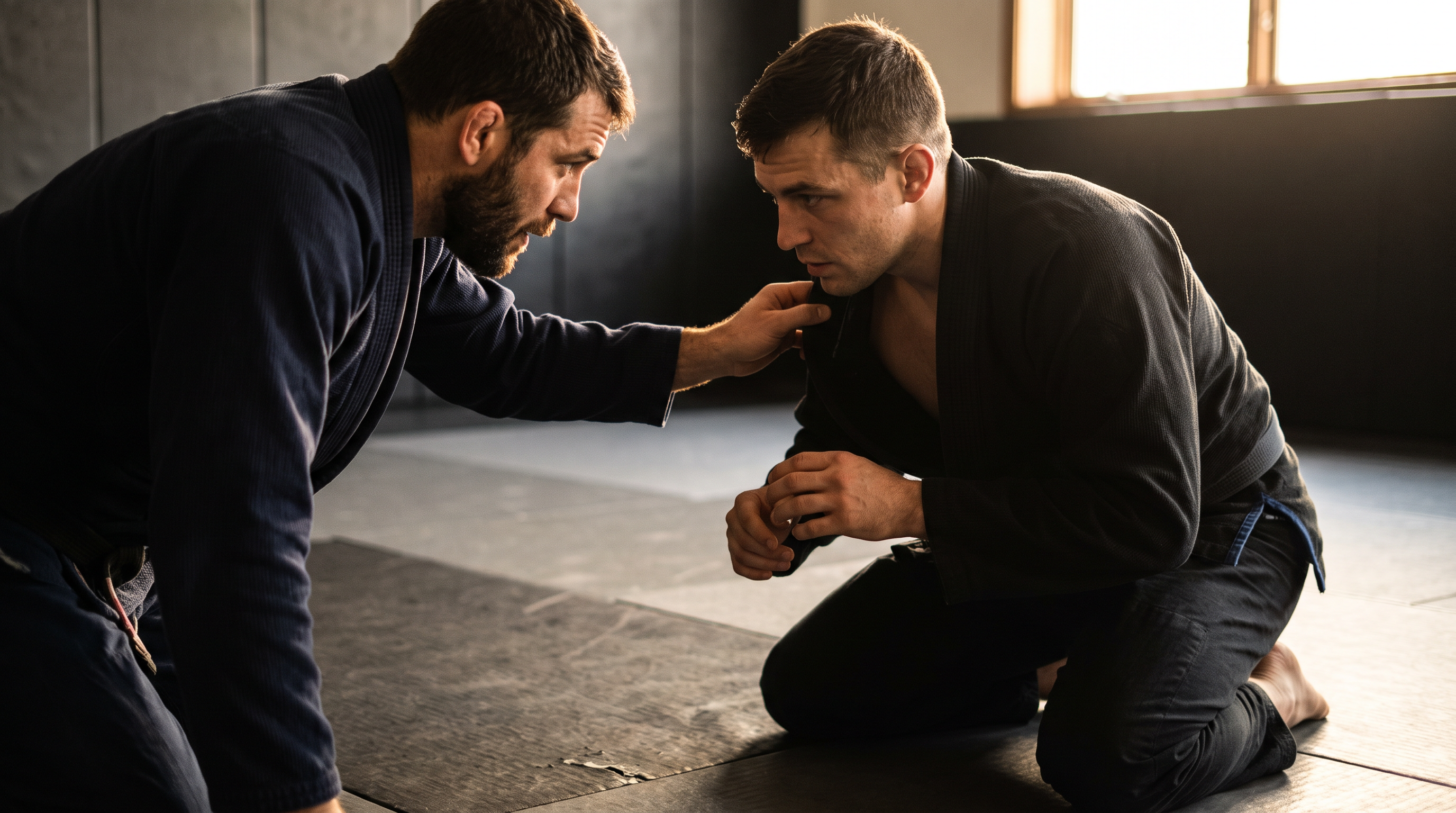
Drilling vs Rolling: How to Split Your BJJ Training for Faster Progress
TL;DR. Drilling builds the technique; rolling stress-tests it. Most intermediates roll too much and drill too little, so moves never become reflex. A simple weekly split — dedicated drilling reps, positional sparring, then free rolling — turns knowledge into skill. Pick one focus per week, drill it deliberately, then test it under progressive resistance. Review what you learned before the next session so nothing gets lost.
Every grappler eventually asks the same question: should I drill more or roll more? You watch instructionals, you learn something new in class, and then five minutes into your first roll it disappears. You default back to the same three moves you always use. Sound familiar?
The honest answer is that drilling and rolling are not competing activities — they are two halves of the same skill loop. Drilling installs the movement. Rolling tells you whether it works, when to apply it, and against whom. Skip either half and progress stalls. This guide walks through why so many intermediate practitioners get the split wrong, a simple weekly system you can actually stick to, the mistakes to avoid, and how to make sure the details you learn on Monday are still with you on Friday.
Key takeaways
- Drilling grooves the movement pattern; rolling teaches you when and against whom to use it.
- Positional sparring is the missing link between silent reps and full rolls — most people skip it.
- Working one focused technique or position per week beats chasing a new move every class.
- Deliberate drilling means intent, resistance progression, and honest self-feedback, not mindless reps.
- Free rolling without a goal builds fitness and instincts but rarely fixes technical holes.
- Reviewing your notes or a technique card before class dramatically improves recall on the mat.
- There is no universal ratio — your split should shift based on belt level, goals, and injury status.
Why this happens: the drilling-vs-rolling gap
Most hobbyist grapplers train two or three times a week. In a typical class you get maybe a short block of technique demonstration, a few minutes of cooperative reps, and then a long stretch of live rolling. That structure feels productive — you are sweating, you are competing — but it heavily weights the schedule toward testing skills you have barely installed.
Think of it like learning an instrument. Drilling is your scales and slow practice. Rolling is the live performance. If you only ever perform, your fundamentals never deepen; you just keep playing the same three songs you already know. On the mat, this shows up as a shrinking game. You have a favorite guard, one sweep, one submission, and everything else you "learned" fades. It fades because you never gave it enough focused reps to become automatic before you tried to use it against a resisting partner.
The other side of the coin is the practitioner who drills endlessly but avoids hard rolls. They know the moves in the abstract but freeze when someone actually fights back. Timing, grip fighting, weight distribution — those only develop under resistance. So the goal is not "more drilling" or "more rolling." It is the right kind of each, in the right order, on the right focus.
Remember. Position before submission — and drilling before rolling. You cannot pressure-test a technique your body does not yet know.
A simple system: how to structure your BJJ practice week
Here is a straightforward framework you can adapt to whatever schedule your academy runs. It works for anyone from a fresh blue belt up. The core idea: pick one focus per week, feed it through three intensity levels, and review before every session.
- Pick one weekly focus. Not a whole position — one specific technique or sequence. For example: "scissor sweep from closed guard" or "knee-cut pass to side control." Write it down. This is your rep target for the week.
- Do dedicated slow-drill reps. Before class or during the technique block, do controlled reps with zero resistance. Focus on grips, angle, weight, and finishing detail. Move slowly enough that you can correct yourself mid-rep. Quality over quantity — a smaller number of perfect reps beats mindless volume.
- Add cooperative flow reps. Once the motion feels smooth, have your partner give you the exact reaction the technique is designed for. They are not fighting yet — they are feeding you the right stimulus so you can practice reading it and responding.
- Introduce positional sparring. Start from the specific position (e.g., closed guard, both grips established) and go live for short rounds. Your partner resists at maybe half intensity at first, then builds. This is where drilling turns into skill. If you only do this step, you will still improve faster than most.
- Test it in free rolling. In your regular rolls, actively hunt for the position where your focus technique lives. Do not force it — invite it. If you get there and it works, note it. If it fails, note why.
- Debrief immediately after training. Spend a few minutes writing or recording what happened. What did your partner do that you did not expect? What detail did you forget? This is where most learning is lost — the details are still fresh for a few hours and then they fade.
- Review before the next session. Before you drive to the gym, read your notes or watch the relevant clip again. Walking onto the mat with the technique already loaded in your head is the single biggest lever for retention.
A rough weekly split you can adapt
| Session type | What you do | Approximate share of mat time |
|---|---|---|
| Focused technique drilling | Slow, deliberate reps of your weekly focus | Meaningful, not token |
| Positional sparring | Live rounds from a specific start position | The largest slice for most intermediates |
| Free rolling | Full open rolls at varied intensities | Enough to test and stay sharp, not so much it eats the week |
| Review & note-taking | Recap notes, watch a short clip, prep for next class | A short block, ideally daily |
The exact percentages depend on your goals. Competitors ramp up hard rolling before a tournament. Injured grapplers lean into slow drilling. Beginners should skew heavily toward drilling and positional work. There is no universal ratio, but if free rolling is the only thing you do at intensity, that is the imbalance to fix.
Remember. Small, consistent reps beat marathon sessions. Ten minutes of focused drilling before class, three times a week, will outpace one heroic weekend session.
Common mistakes that stall your progress
Even with a good framework, a few habits will quietly undo your work. Watch for these:
- Chasing a new move every class. You cannot install a technique in one exposure. Rotate focuses weekly at the fastest, not daily.
- Rolling every round at 100%. Ego rolling turns every session into a survival drill. You cannot try new things when you are gripping for your life.
- Drilling without intent. Going through the motion while chatting with your partner is not drilling — it is stretching. Every rep should have a specific detail you are checking.
- Skipping positional sparring. This is the biggest mistake for intermediates. Without it, you never build the timing that connects drills to rolls.
- Never resisting during drills. Zero-resistance reps are fine early, but if you never build up the pressure, the technique breaks the first time it meets a real defender.
- Only rolling with people you can beat. You learn defense from harder partners and offense from equal or slightly easier ones. You need both.
- Not reviewing what you learned. Watching an instructional or attending a class is input. Without review, much of it fades within days. Notes, clips, or a structured card system are what make techniques stick.
Remember. Study the detail, then drill it, then review it. If any of those three steps is missing, the technique will not be there when you need it.
Making retention part of the loop with BJJ Memo
The hardest part of the system above is step 6 and 7 — the review loop. After a long class, most people are tired and just want to eat. The details you learned an hour ago quietly slip away. BJJ Memo is built to close that gap. Paste a YouTube URL of the instructional or technique clip you are working on and the app turns it into a structured Technique Card — clear steps, key details, and tappable timestamps for the important visual moments. Your cards live in a personal, searchable library, organized by position or submission, and a revision flow surfaces them before your next session.
It is not a replacement for drilling or a coach. It is a way to make sure the knowledge half of the equation does not leak out between sessions, so when you show up to class you can actually put the reps in on something you still remember. Learn more at BJJ Memo or read our related guides on how to remember BJJ techniques and learning from YouTube instructionals.
Frequently asked questions
How much of my training should be drilling versus rolling?
There is no universal ratio. As a rough guide, if you are a hobbyist trying to build skill, aim to spend meaningful time on focused drilling and positional sparring — not just free rolling. Competitors close to a tournament will roll more; beginners and injured grapplers should skew toward drilling. The imbalance to fix is when free rolling is essentially your only intensity work.
Is drilling boring compared to rolling?
It can feel that way, especially if you drill without intent. Fix this by picking one focus per week, giving each rep a specific detail to check, and progressing to positional sparring quickly. Drilling with a clear target and a resisting partner is closer to a puzzle than a chore.
What is positional sparring and why does it matter?
Positional sparring means starting a live round from a specific position — for example, both partners in closed guard with grips established — and going until someone escapes, sweeps, or submits, then resetting. It is the bridge between drills and full rolls, and it is where most technical growth actually happens.
How do I stop forgetting techniques I learned in class?
Review them the same day, before the details fade, and again before your next session. Notes, short video clips, or a structured card system all work. The tool matters less than the habit. Walking onto the mat with the technique already in your head is what makes it available when you need it.
Should I drill techniques I already know, or only new ones?
Both, but weighted toward what you actually use. Your A-game submissions and passes should get regular refresh reps so they stay sharp. New techniques need focused installation reps for weeks before they belong in your live game.
How long before a new technique shows up in my rolls?
Honestly, longer than you want. It usually takes weeks of drilling plus positional sparring before a move appears on its own in a free roll. If you expect it in one class, you will be disappointed and quit on it too early.
Bring it all together
Drilling and rolling are not a battle. They are a loop: install the movement, test it against progressive resistance, review what happened, install the correction. Most intermediates stall because they skip the installation and review halves and try to learn by rolling alone. Fix that, and progress starts compounding again.
Next time you watch an instructional or leave class with something new, save it as a technique card in BJJ Memo so it is there before your next roll. Build your own technique library and revise before training — BJJ Memo on iOS and Android.
For real feedback and safety, train the technique at a legit academy with a qualified coach — BJJ Memo helps you remember and revise, it does not replace mat time.
Last updated 2026-08-12.